© Frank Le Blancq
Jersey Airport, St Peter, Jersey
Latitude: 49° 12' 25'' N
Longitude: 2° 11' 51'' W
02 June 2007 0453 (Local Time)
Camera direction: towards N
Image P/S code: S.11.1.1.3.1
Image I.D.: 4872
-
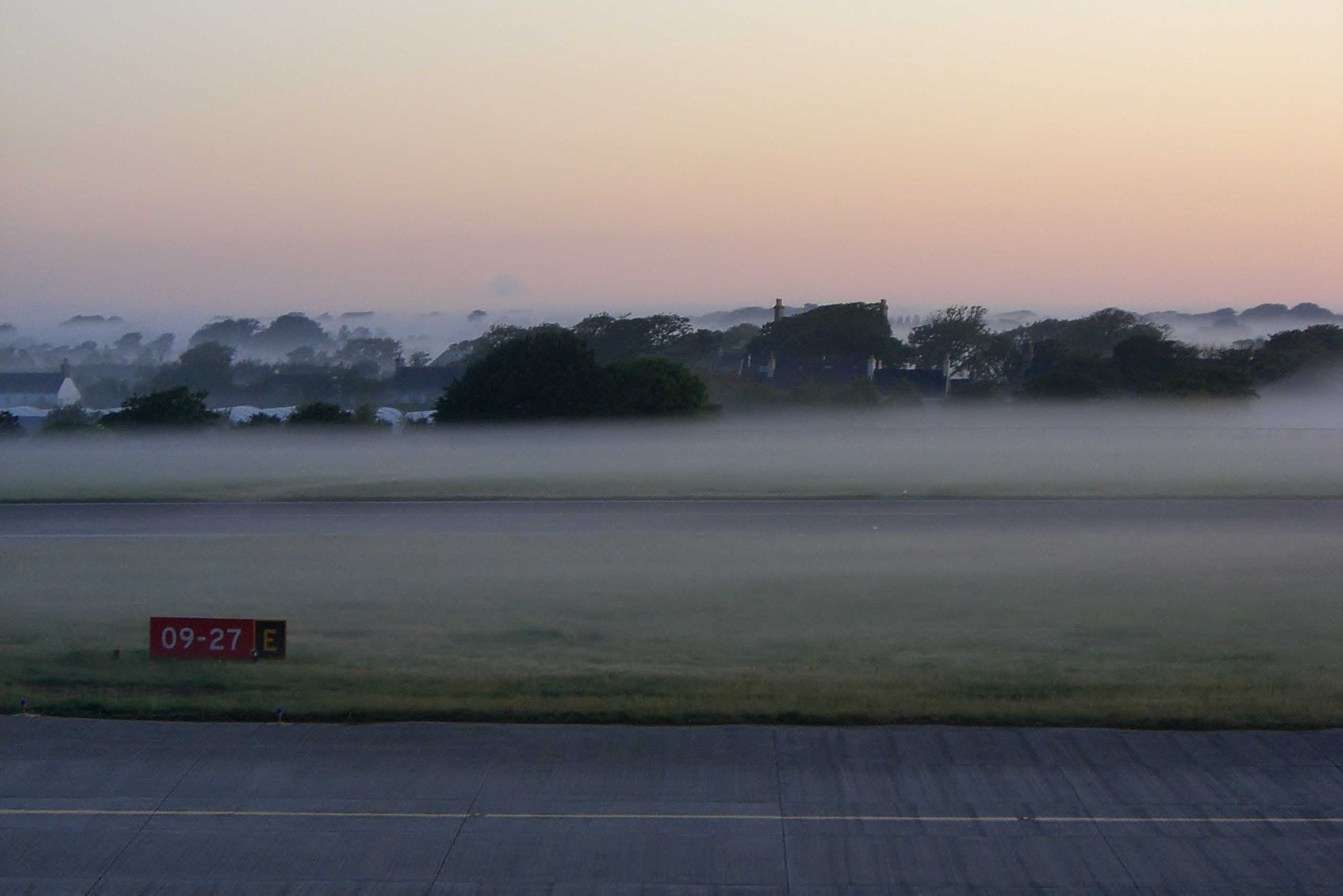
Ground fog/shallow fog and mist
Ground fog, also known as shallow fog, is a radiation fog that is shallow in depth. Over land, the depth is defined as 2 m or less; above this height, the horizontal visibility is not restricted by the fog.
This picture was taken at Jersey Airport, Jersey (WMO 03895), about 15 minutes before sunrise. In the background, the fog at 2 and 3 has thickened to a depth greater than 2 m. The complex microphysics of fog formation is shown here, as shallow fog has formed over grass (grass minimum: 2.0 °C), but has not formed over the taxiway or runway (concrete minimum: 4.9 °C). The air minimum was 8.4 °C.
With the general relative humidity of the air measured as 97%, the reduction in horizontal visibility above the ground fog to 7 km is due to mist.
Links in the image description will highlight features on the image. Mouse over the features for more detail.
© Frank Le BlancqJersey Airport, St Peter, JerseyLatitude: 49° 12' 25'' NLongitude: 2° 11' 51'' W02 June 2007 0453 (Local Time)Camera direction: towards NImage P/S code: S.11.1.1.3.1Image I.D.: 4872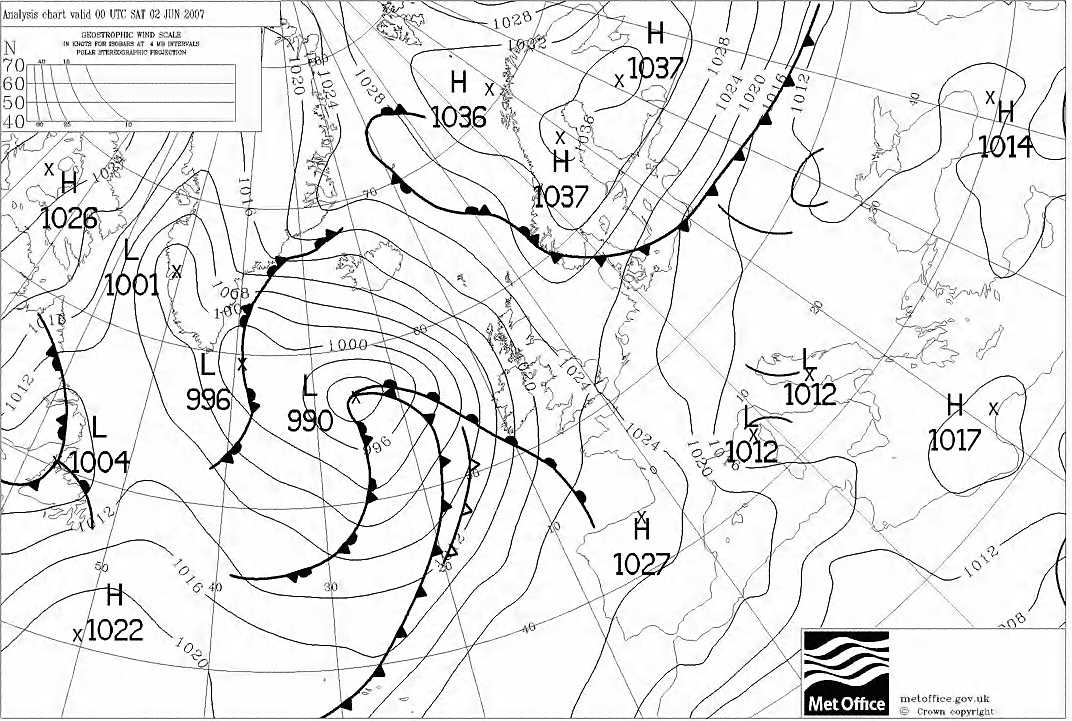
Low pressure (996 hPa) was centred over the North Atlantic, with a weak warm front moving north-east towards western UK. High pressure (1 037 hPa over Scandinavia) extended a ridge over the North Sea to northern France and a secondary centre of high pressure over northern Spain. Slack pressure covered the English Channel. The wind was calm at the time of the photograph.
© Crown Copyright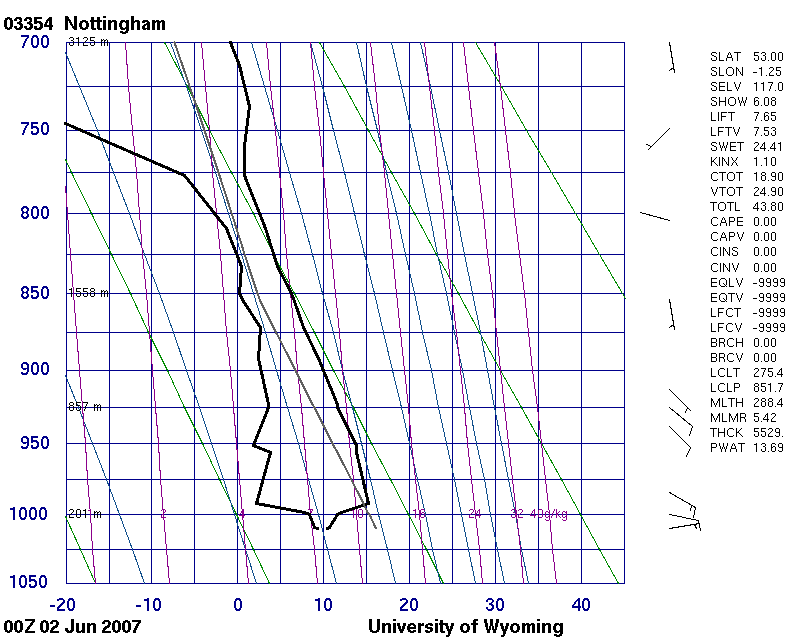
The distant sounding from Nottingham, England, UK (WMO 03354) at 0000 UTC is representative of the air mass. The air is near saturation at the surface, some hours before dawn, with dry air above the first few metres. The Jersey Airport, Jersey screen minimum was 8.4 °C but the grass minimum was 2.0 °C, well below the air mass dew point of 9 °C to 10 °C.
© University of Wyoming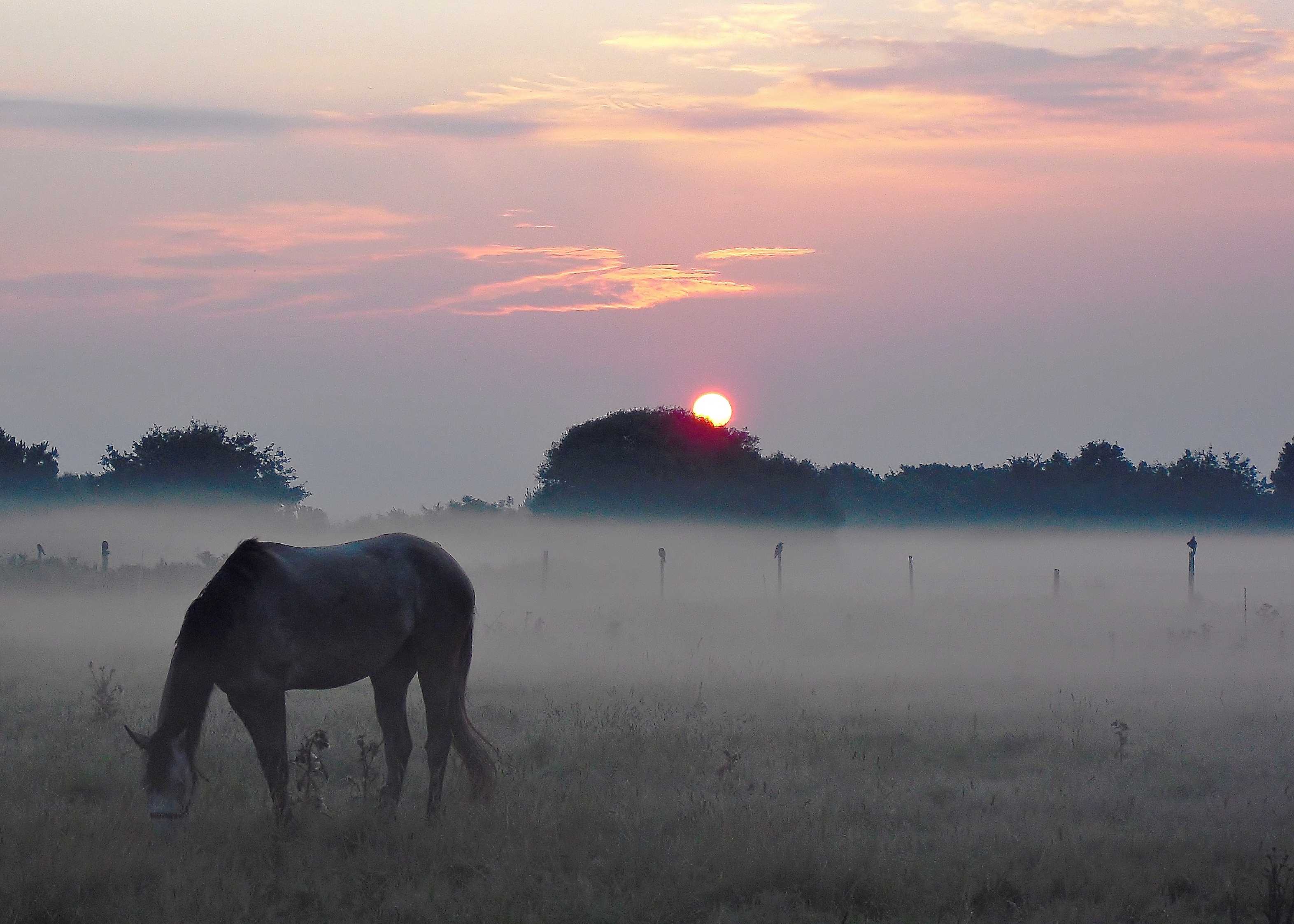
Ground fog/shallow fog
Radiation fog is formed when the ground surface cools through radiation (usually at night), cooling the air just above the ground to its saturation temperature. When the fog occurs in a shallow enough layer that it does not restrict horizontal visibility when viewed from a height of about 2 m, it is known as ground fog or shallow fog.
This image shows an extensive layer of shallow fog (less than 2 m in depth) that has formed over a field of grass. The crows in the background are perched on posts approximately 1 m in height. Small amounts of Altocumulus and Cirrus cloud are in the sky and the visibility over the top of the ground fog is fairly good.
Links in the image description will highlight features on the image. Mouse over the features for more detail.
© Frank Le BlancqNoirmont Common, JerseyLatitude: 49° 10' 29'' NLongitude: 2° 10' 7'' W19 July 2011 0551 (Local Time)Camera direction: towards ENEImage P/S code: P.11.1.1.3.1Image I.D.: 4867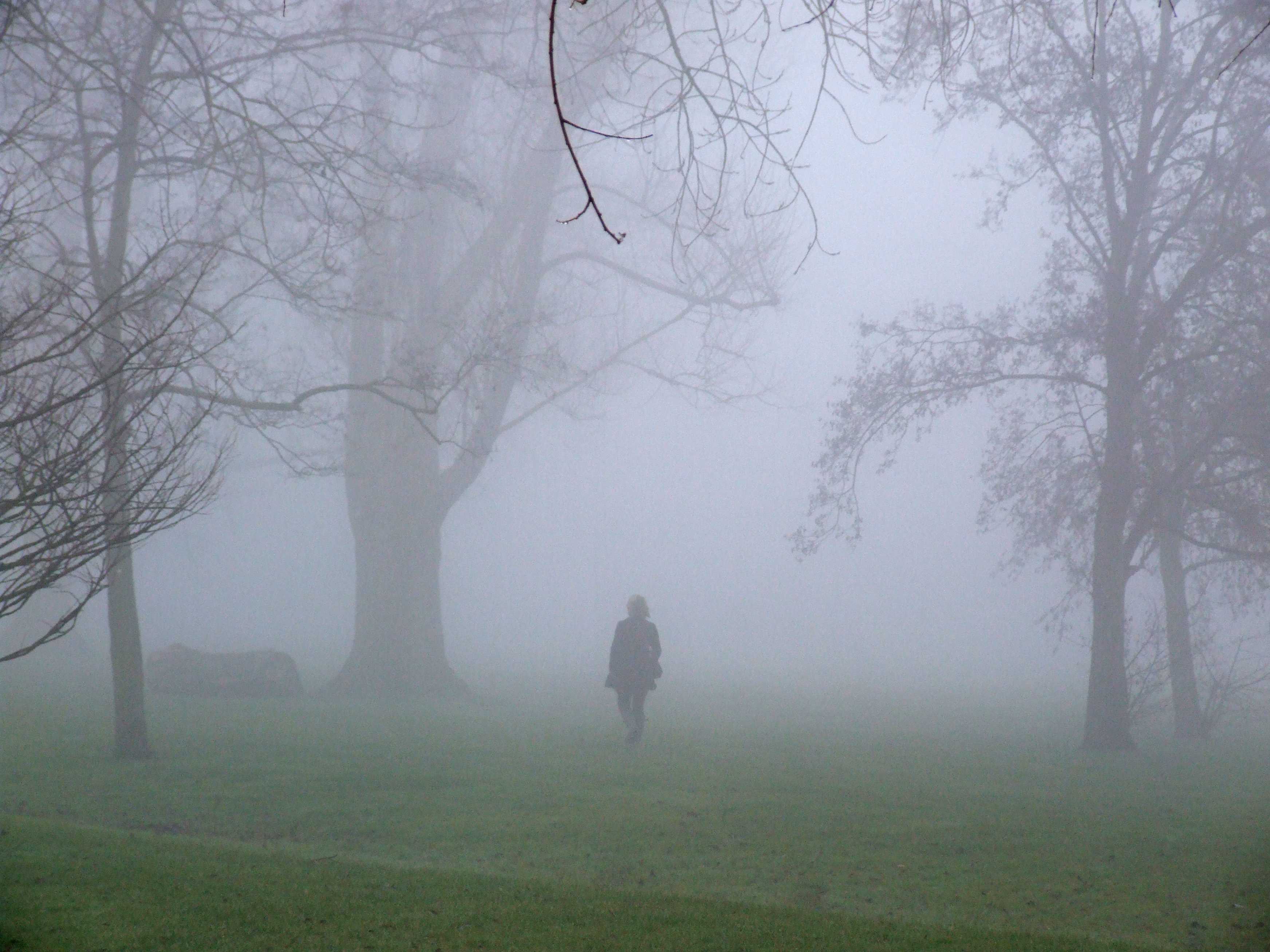
Radiation fog
Radiation fog is formed when the ground surface cools through radiation, usually at night under clear skies and light wind, cooling the air just above the ground to its saturation temperature. The fog is a suspension of very small, usually microscopic water droplets in the air that reduce the visibility at the Earth's surface. In this picture, the visibility is less than 100 m and the fog is deep enough that it forms a whitish veil that covers the landscape.
During the night a showery trough crossed eastwards over southern England, UK, which lay in a weak ridge of high pressure, ahead of a frontal system approaching from the west.
Links in the image description will highlight features on the image. Mouse over the features for more detail.
© George AndersonHenley-on-Thames, England, United Kingdom of Great Britain and Northern IrelandLatitude: 51° 31' 53'' NLongitude: 0° 53' 29'' W14 January 2009 1103 (Local Time)Camera direction: towards SWImage P/S code: P.11.1.1.3Image I.D.: 5458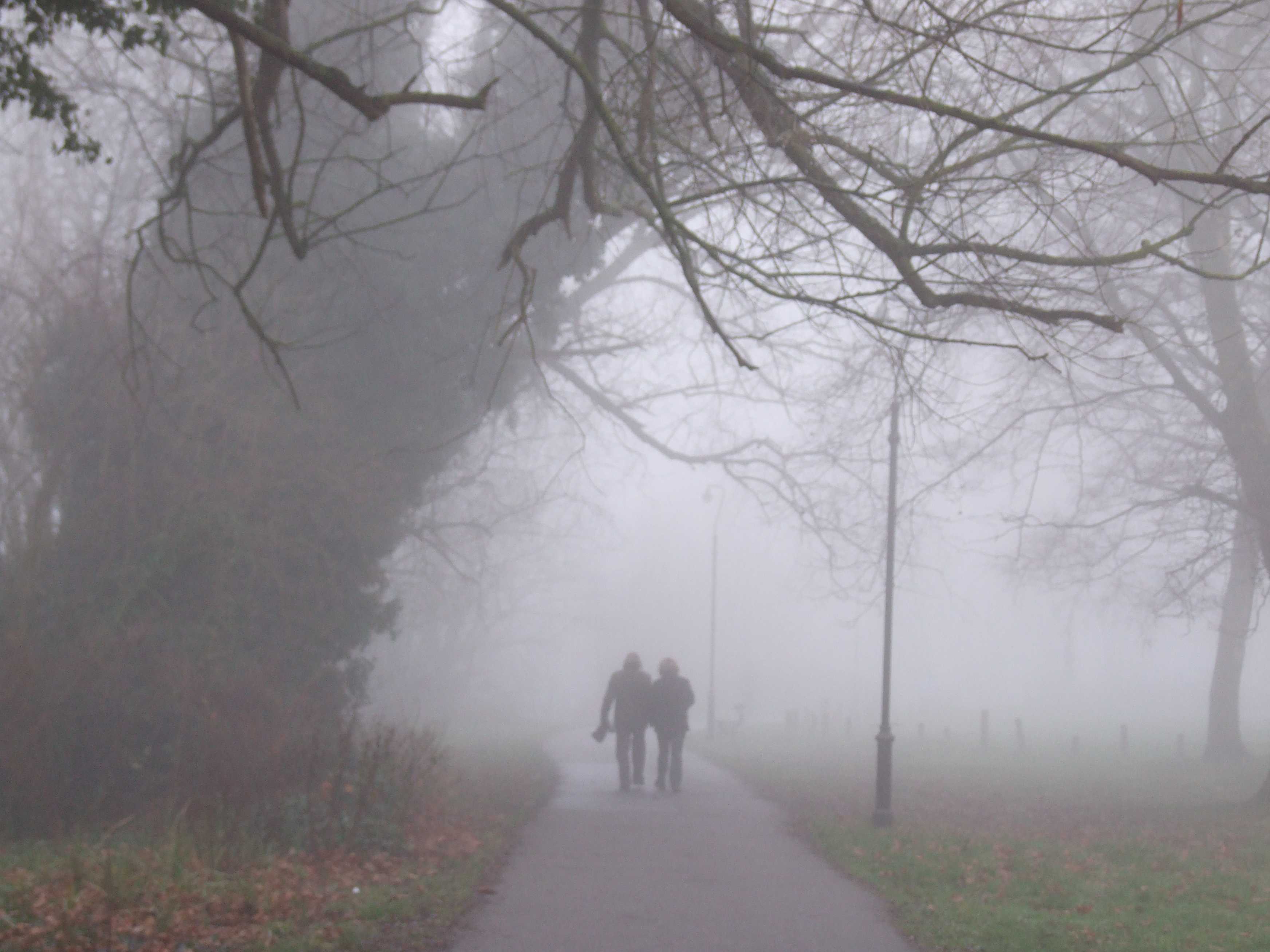
Fog
Fog is a suspension of very small, usually microscopic water droplets in the air, reducing visibility at the Earth's surface. The term is used when the horizontal visibility is reduced to less than 1 km. In this picture the visibility is only about 100 m.
The reduction in visibility depends on the structure of the fog, and especially on the number density and size distribution of the droplets. The structure may vary a great deal in time and space. However, in this particular example on the banks of the River Thames in Reading, England, UK at 1500 hours in the afternoon, the visibility changed only slowly and the fog persisted throughout the day.
A ridge of high pressure extended over southern England from an anticyclone centred over continental Europe.
Links in the image description will highlight features on the image. Mouse over the features for more detail.
© George AndersonReading, United Kingdom of Great Britain and Northern IrelandLatitude: 51° 27' 41'' NLongitude: 0° 57' 58'' W23 December 2007 1500 (Local Time)Camera direction: towards WImage P/S code: P.11.1.1Image I.D.: 4697