© Duncan Paul Kelly
Vryheid, South Africa
Latitude: 27° 45' 41'' S
Longitude: 30° 46' 42'' E
30 December 2011 2257 (Local Time)
Camera direction: towards W
Image P/S code: S.14.1.1.1
Image I.D.: 4950
CL = 9, CM = /, CH = /
-
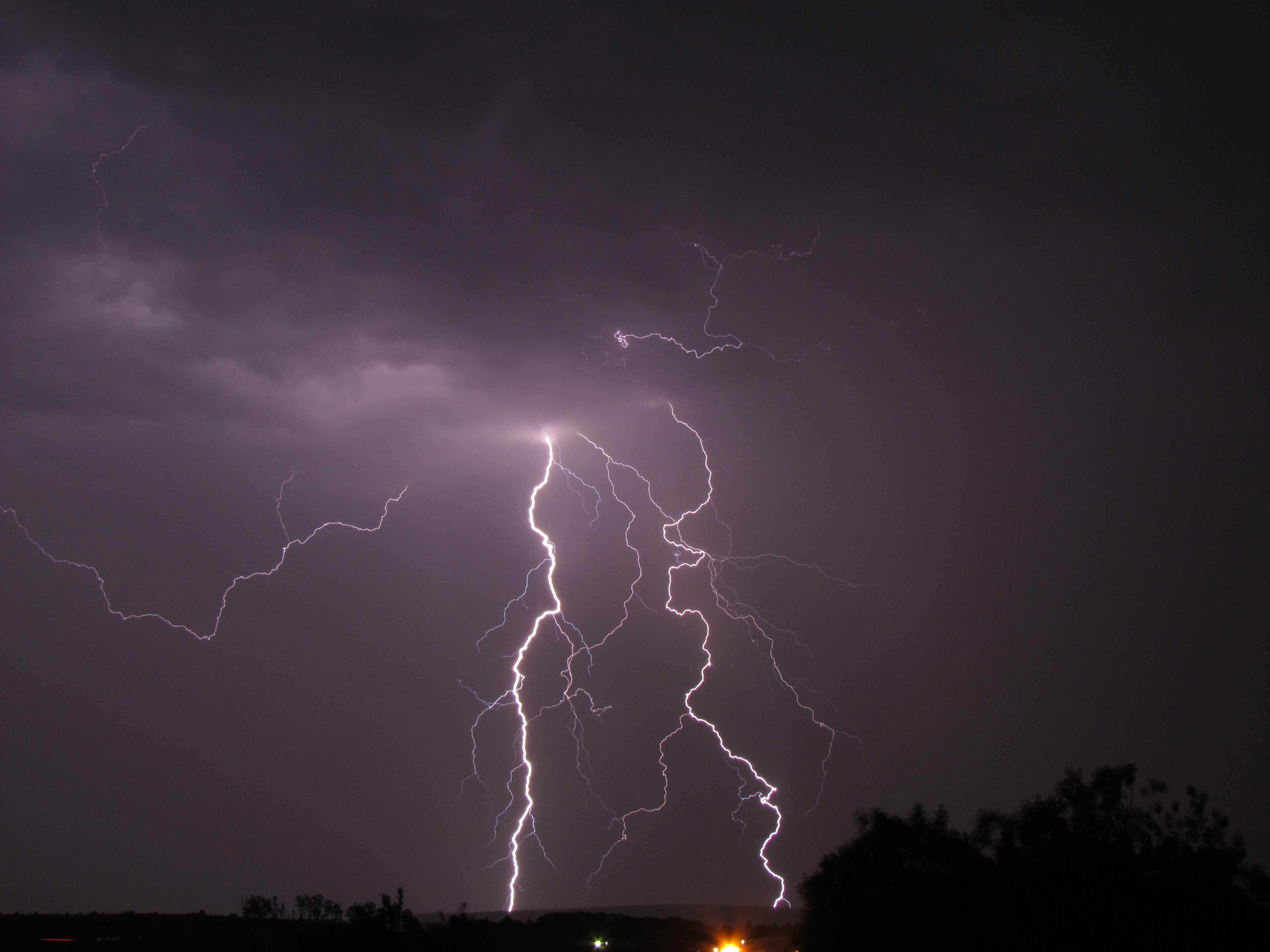
Lightning: ground discharges
The main features in this picture are the lightning ground discharges at 1 and 2 (cloud-to-ground lightning). The discharges appear to follow a tortuous path between cloud and ground and are commonly known as forked lightning. Smaller branches from the main discharge at 3, 4 and 5 dissipate into clear air. The discharge on the left of the picture, from cloud to air, appears not to strike the ground and is an air discharge.
When lightning occurs, the cloud is identified as Cumulonimbus. If it is not possible to determine whether the species is calvus or capillatus, as in this picture, by convention the coding is CL = 9.
Links in the image description will highlight features on the image. Mouse over the features for more detail.
© Duncan Paul KellyVryheid, South AfricaLatitude: 27° 45' 41'' SLongitude: 30° 46' 42'' E30 December 2011 2257 (Local Time)Camera direction: towards WCL = 9, CM = /, CH = /Image P/S code: S.14.1.1.1Image I.D.: 4950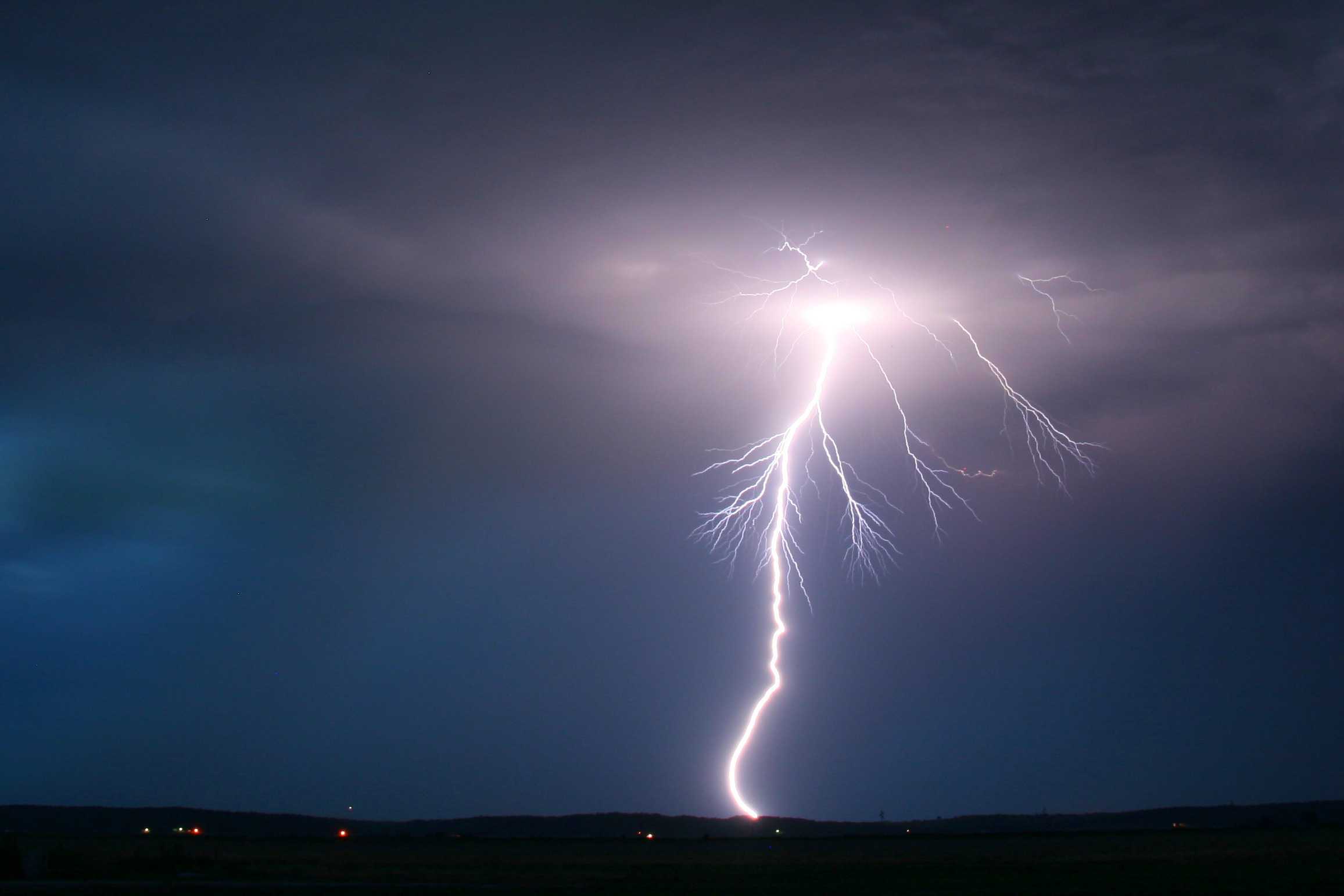
Lightning: ground discharge
This photograph shows a cloud-to-ground lightning discharge from a rather high-based evening thunderstorm over Iowa, USA.
Links in the image description will highlight features on the image. Mouse over the features for more detail.
© Matthew ClarkPrairie, Iowa, United States of AmericaLatitude: 40° 45' 9'' NLongitude: 95° 33' 53'' W31 May 2009 2200 (Local Time)Camera direction: towards EImage P/S code: P.14.0Image I.D.: 5073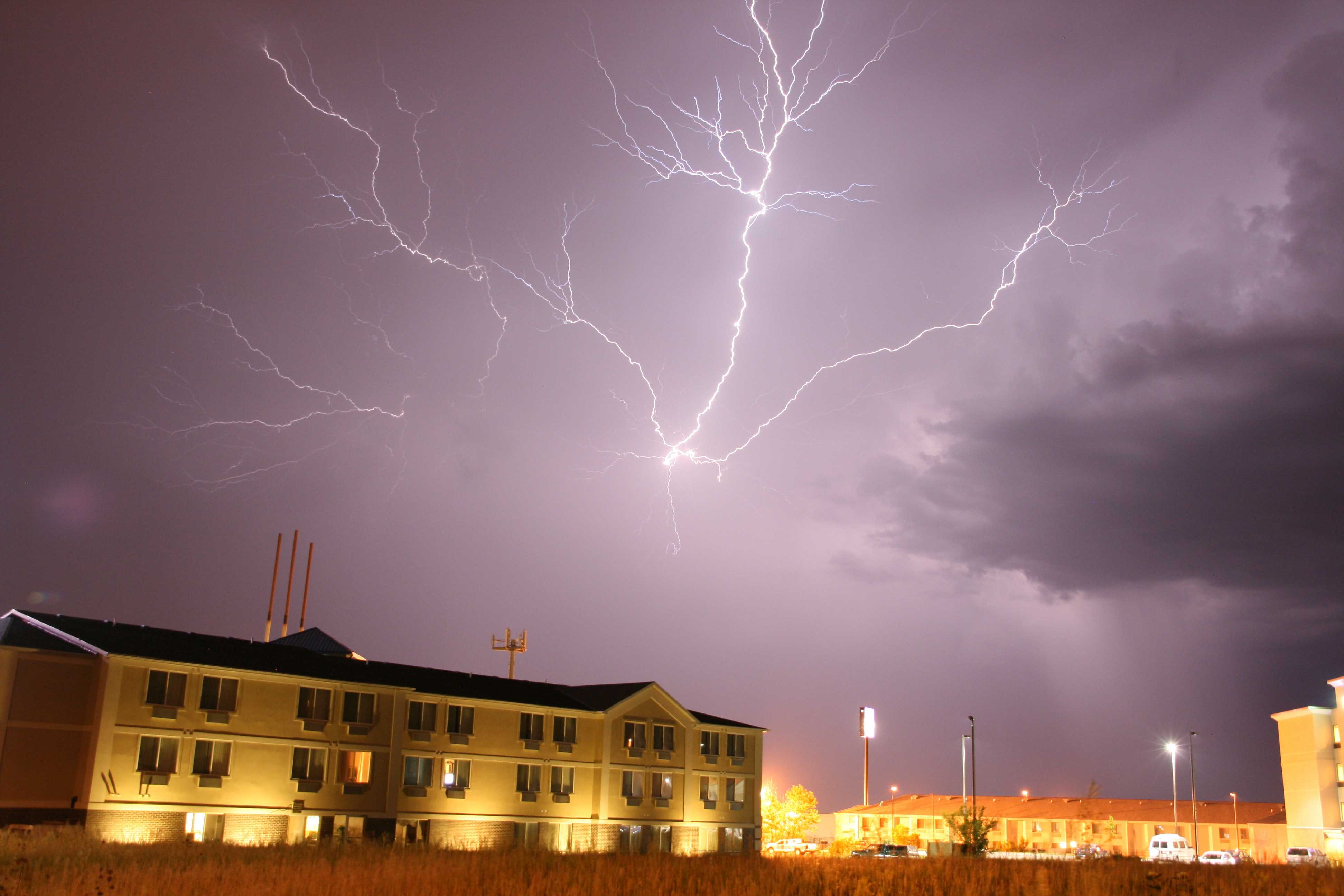
“Anvil crawler” lightning
This picture shows lightning branching through the anvil of a strong mid-level thunderstorm over Lincoln, Nebraska, USA. These cloud discharges are colloquially known as ”anvil crawlers”.
A rain-free updraught base can be seen at the right-hand side of the image. Elsewhere, cloud detail is masked by heavy precipitation. Shafts of precipitation are evident near to the rain-free updraught base.
Links in the image description will highlight features on the image. Mouse over the features for more detail.
© Matthew ClarkLincoln, Nebraska, United States of AmericaLatitude: 40° 48' 49'' NLongitude: 96° 38' 4'' W01 June 2009 0015 (Local Time)Camera direction: towards SWImage P/S code: P.14.1.1.2.1Image I.D.: 5074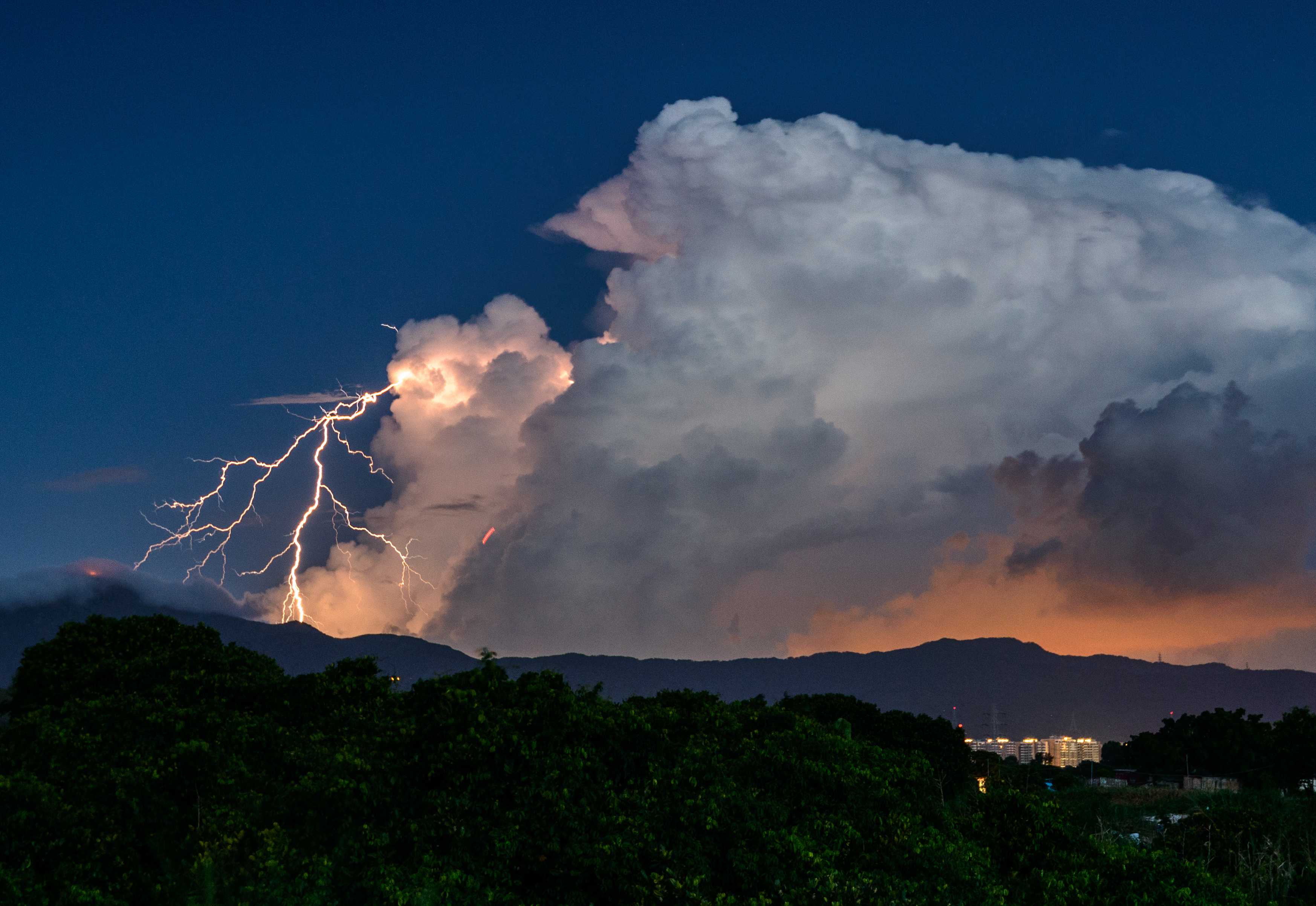
Thunderstorm
A tropical depression over the northern part of the South China Sea intensified into a tropical storm named Mirinae. In Hong Kong (China), the weather was hot with sunny periods during the day and there were also a few squally showers and thunderstorms.
Thunderstorms are associated with Cumulonimbus clouds and are most often accompanied by precipitation. This photograph shows a thunderstorm during the evening from a Cumulonimbus calvus cloud. A thunderstorm is defined as one or more sudden electrical discharges, manifested by a flash of light (lightning) and a sharp or rumbling sound (thunder).
Links in the image description will highlight features on the image. Mouse over the features for more detail.
© Sung Lok CheungYuen Long, Hong Kong, ChinaLatitude: 22° 28' 33'' NLongitude: 114° 1' 20'' E26 July 2016 1934 (Local Time)Camera direction: towards SECL = 3, CM = 0, CH = 0Image P/S code: P.14.1Image I.D.: 4997