© Yakov
Leningrad Oblast, Russian Federation
Latitude: 59° 52' 54'' N
Longitude: 31° 3' 18'' E
08 July 2014 0310 (Local Time)
Image P/S code: S.10U.3
Image I.D.: 5576
-
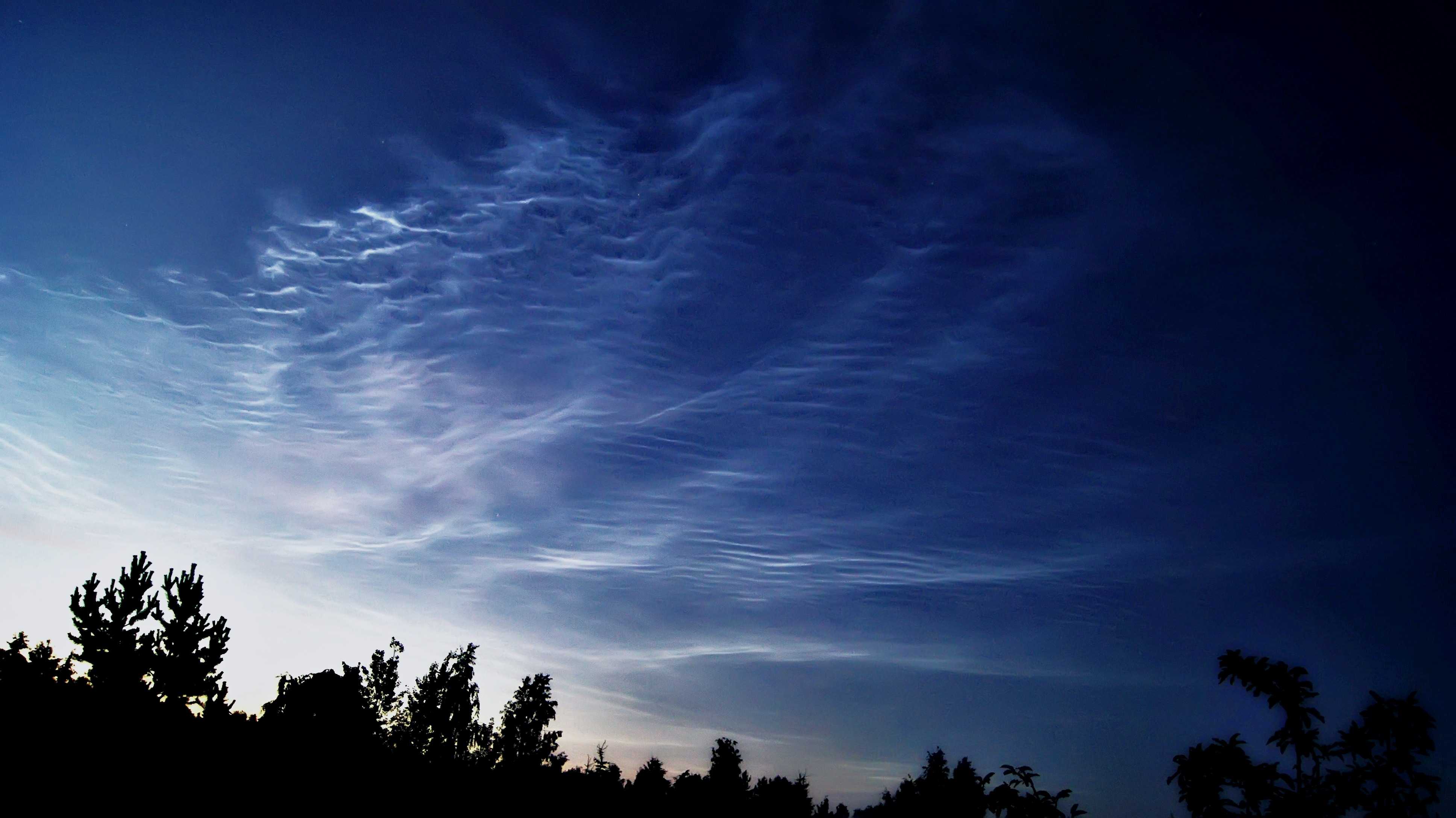
Noctilucent cloud
Noctilucent clouds (NLC) are high-altitude, night-shining clouds that are only visible to observers in mid to high latitudes (approximately 50°N to 65°N or 50°S to 65°S). They only form during the summer when the temperatures in the mesosphere are the coldest.
Noctilucent cloud is distinguished by its typical bluish-white colour. The clouds are brighter than the twilight sky. Billows (type III) are clearly a main feature of this bright display.
Links in the image description will highlight features on the image. Mouse over the features for more detail.
© YakovLeningrad Oblast, Russian FederationLatitude: 59° 52' 54'' NLongitude: 31° 3' 18'' E08 July 2014 0310 (Local Time)Image P/S code: S.10U.3Image I.D.: 5576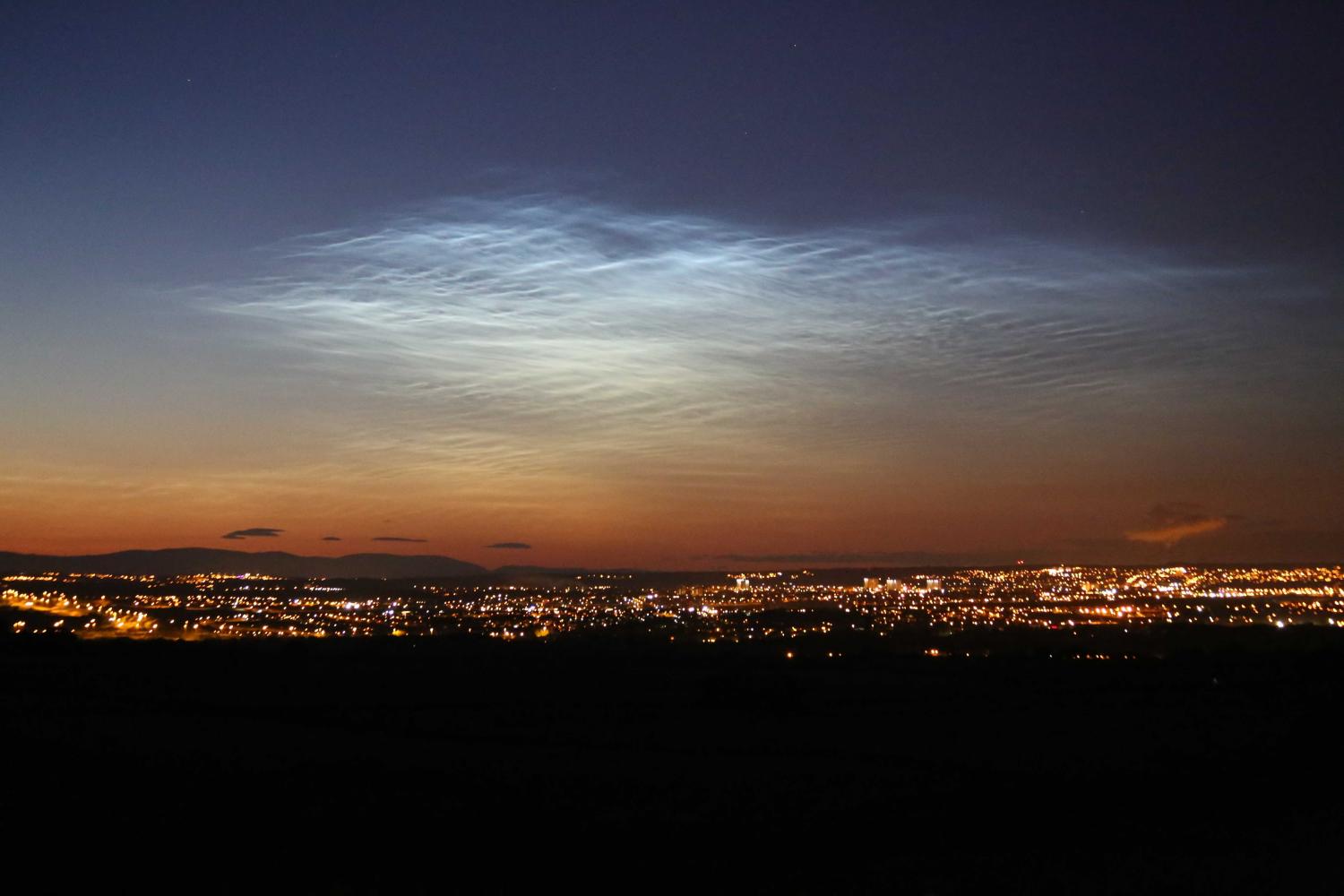
Noctilucent cloud
Noctilucent clouds (NLC) are usually only visible to observers in mid to high latitudes (roughly 50°N to 65°N or 50°S to 65°S) and in the twilight or night sky for a few months in summertime, when temperatures in the mesosphere are the coldest. This photograph was taken in late June, during summer in the northern hemisphere, from a location 55.78°N.
Noctilucent clouds are generally observed during the twilight periods when the Sun is between 6° and 16° below the observer's horizon. It is during this period that the background sky is dark enough for the cloud to be seen, yet the high-altitude clouds are still illuminated by sunlight.
Typically what sets noctilucent clouds visually apart from tropospheric clouds is their visibility in the night and their obvious, and sometimes bright, blue-white colour. The low-level tropospheric clouds at 2 and 3 are within the Earth's shadow and they stand out as dark silhouettes against the relatively brighter background sky. In contrast, noctilucent clouds are always brighter than the twilight sky. Near the horizon, they may have a reddish tint. Two main types of NLC are shown here: bands (type II) – these are long streaks – and billows (type III), seen at 7 and 8 – these are closely spaced, roughly parallel streaks.
Links in the image description will highlight features on the image. Mouse over the features for more detail.
© Ewan KaneEast Kilbride, Scotland, United Kingdom of Great Britain and Northern IrelandLatitude: 55° 46' 49'' NLongitude: 4° 8' 48'' W23 June 2015 2247 (Local Time)Camera direction: towards NWImage P/S code: P.10Image I.D.: 5581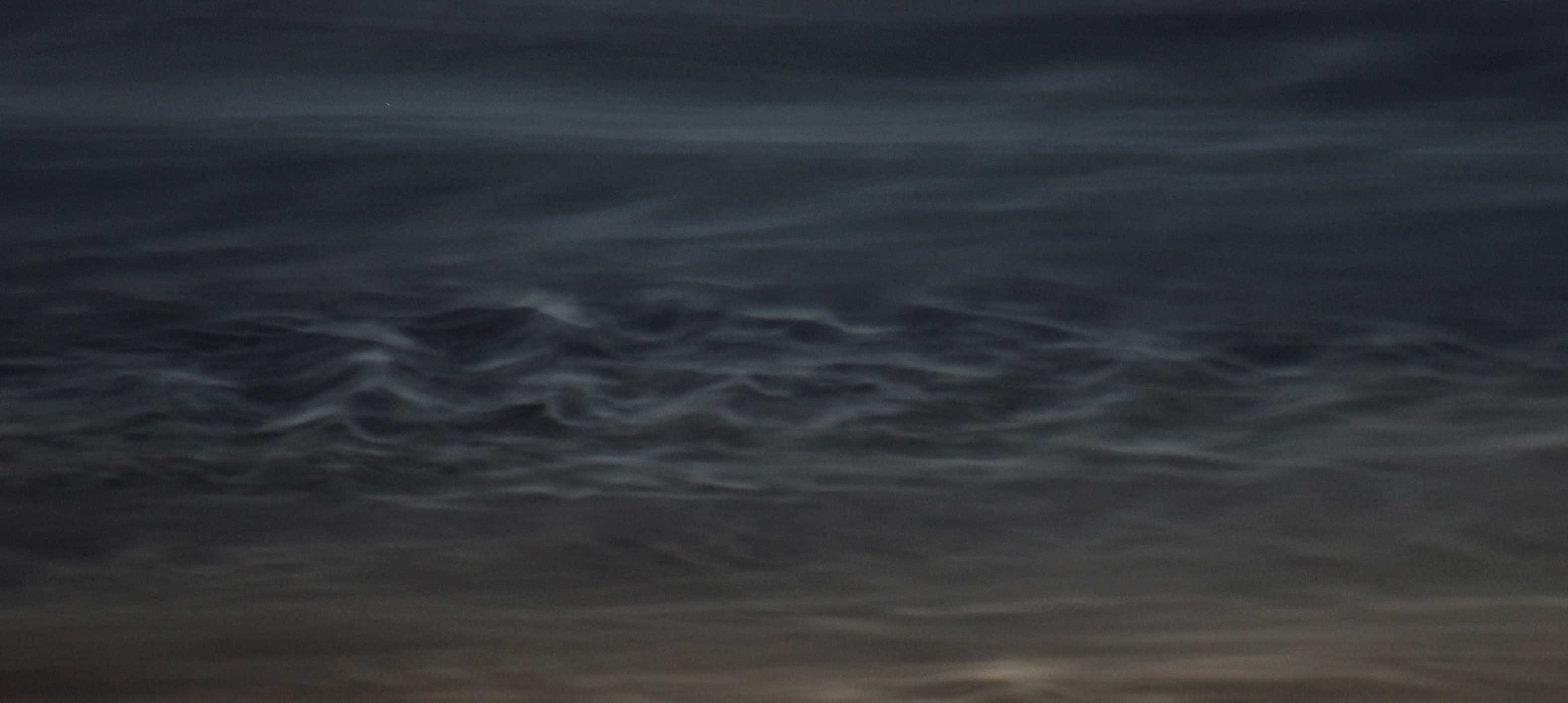
Noctilucent cloud type IIIb – billows: wave-like structure with undulations
Type III – billows: these are arrangements of closely spaced, roughly parallel short streaks. There are two types:
– Type IIIa: comprised of short, straight and narrow streaks
– Type IIIb: exhibiting a wave-like structure with undulations
The billow type shown in this picture is type IIIb – a wave-like structure with undulations.
Links in the image description will highlight features on the image. Mouse over the features for more detail.
© Mark ZalcikNamao, Alberta, CanadaLatitude: 53° 42' 58'' NLongitude: 113° 29' 32'' W09 July 2014 0031 (Local Time)Camera direction: towards NWImage P/S code: P.10Image I.D.: 5690