© Mila Zinkova
San Francisco, California, United States of America
Latitude: 37° 46' 27'' N
Longitude: 122° 30' 46'' W
04 October 2014 1825 (Local Time)
Image P/S code: S.13.7.2
Image I.D.: 5799
-
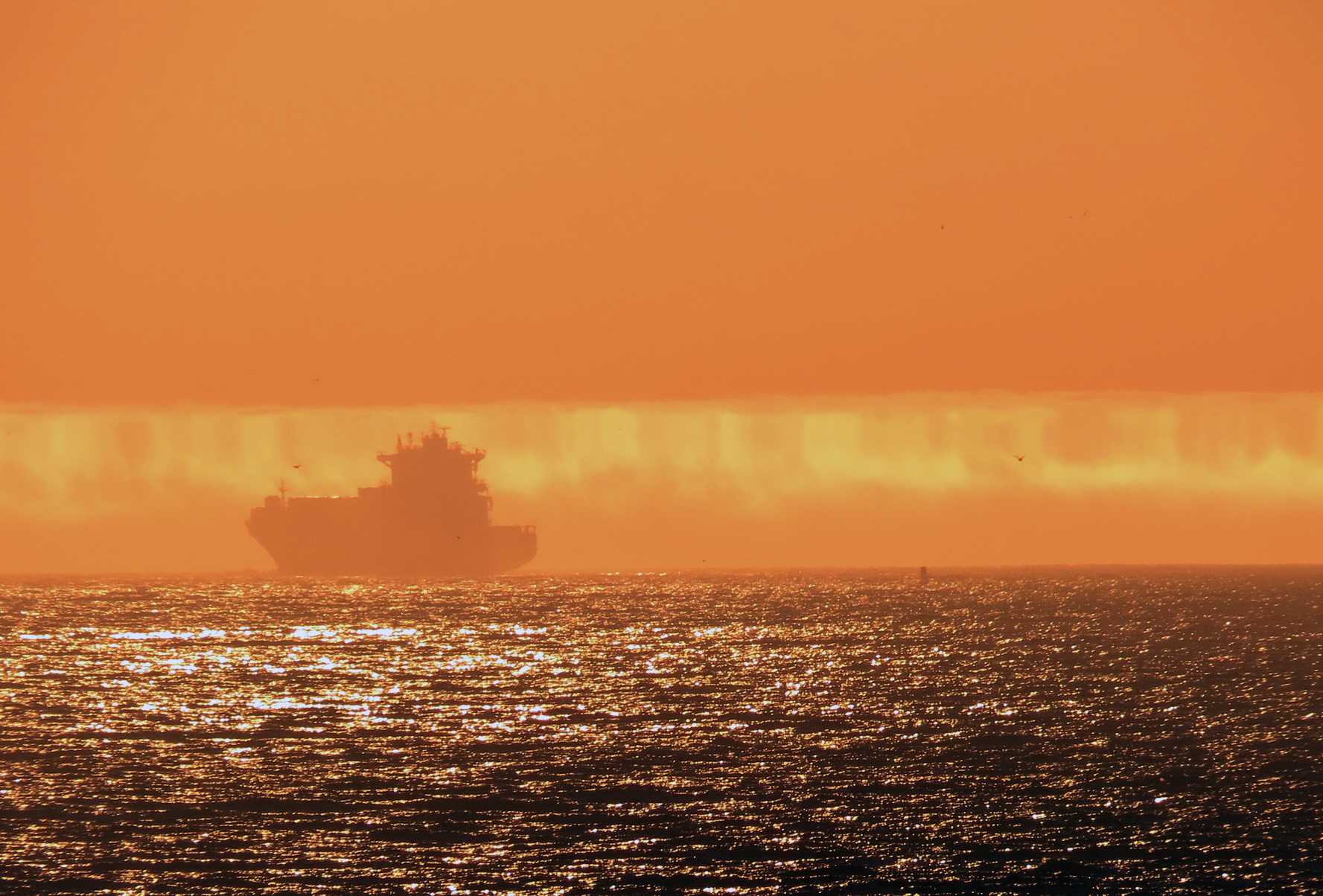
Superior mirage of distant clouds
This photograph from San Francisco, California, USA shows a superior (upper) mirage of distant clouds on the horizon over the Pacific Ocean.
Mirages are due to the curving of light rays through layers of air of differing temperature, density and, therefore, refractive index. In this case, there was a layer of warmer air overlying colder air at the ocean surface. A superior mirage is one where the mirage image appears higher than the true position of the object.
Links in the image description will highlight features on the image. Mouse over the features for more detail.
© Mila ZinkovaSan Francisco, California, United States of AmericaLatitude: 37° 46' 27'' NLongitude: 122° 30' 46'' W04 October 2014 1825 (Local Time)Image P/S code: S.13.7.2Image I.D.: 5799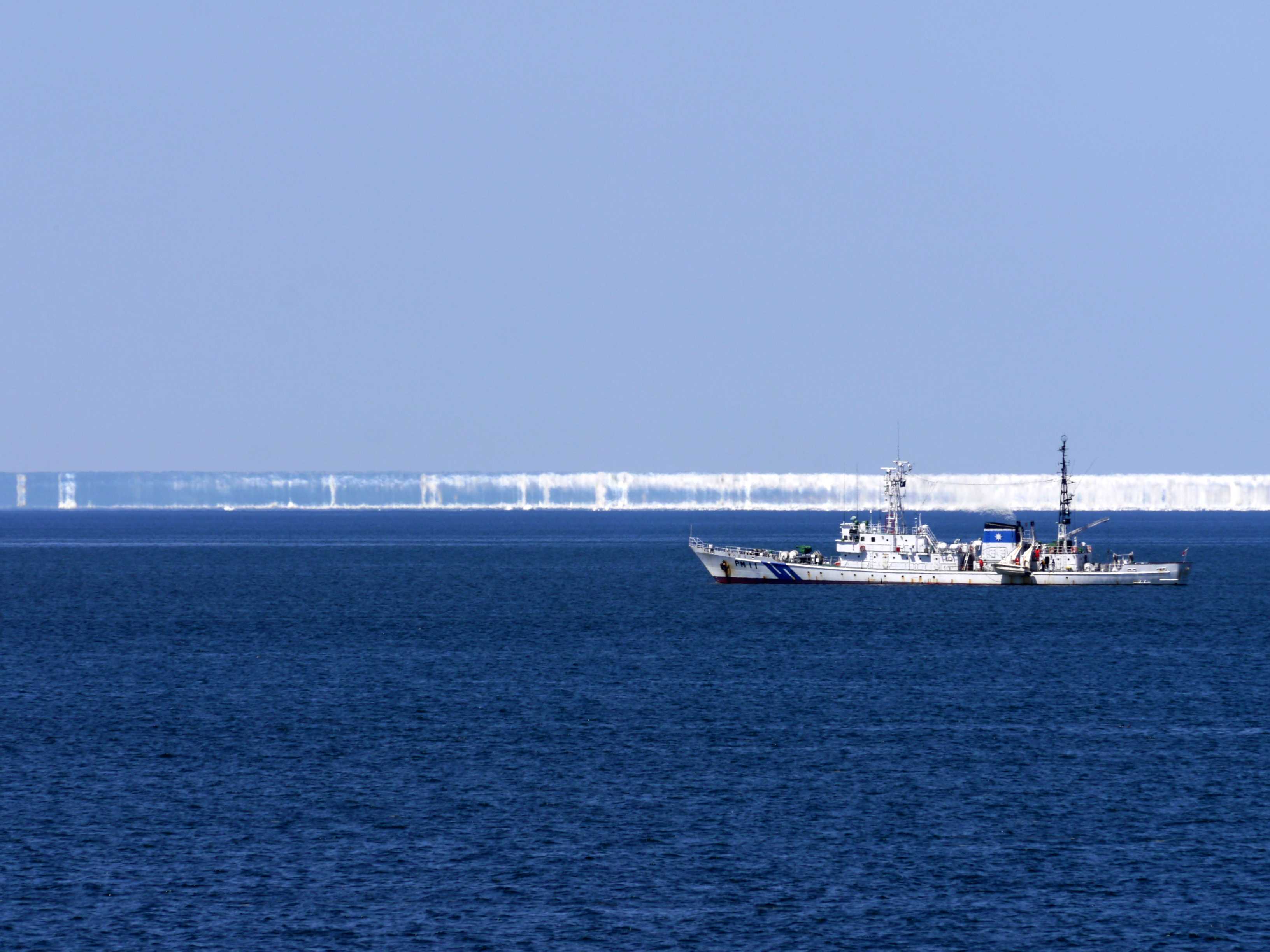
Superior mirage of sea ice
A mirage is an optical phenomenon consisting mainly of images of distant objects. These may be steady or wavering, single or multiple, upright or inverted, vertically enlarged or reduced. They result from the curving of light rays passing through layers of air with changing refractive index because of differences in temperature and therefore in density. Thus, they are observed when the temperature of the Earth's surface differs greatly from the temperature of the air above.
A mirage may occur as a lower mirage (inferior mirage) over intensely heated water surfaces, soils, beaches, roads, etc., or as an upper mirage (superior mirage) over cold surfaces such as snowfields, cold water and ice.
This picture shows an upper mirage, or superior mirage, of sea ice over a cold ocean surface. Warmer, less dense air overlies cold dense air at the sea surface. The terms “upper” and “superior” are applied to the name because in this type of mirage, light from an object is bent downwards towards the observer, making objects appear higher than their true positions.
Links in the image description will highlight features on the image. Mouse over the features for more detail.
© Tomoko SatohIkushinakita, Shari, Shari District, Hokkaido Prefecture, JapanLatitude: 43° 55' 5'' NLongitude: 144° 42' 3'' E29 April 2014 1218 (Local Time)Camera direction: towards NImage P/S code: P.13.7Image I.D.: 4662